
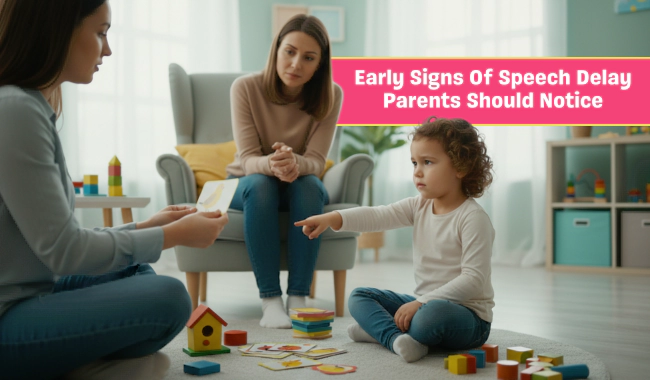
Parents often watch every small change in their child with hope and curiosity. When a child slows down in talking or does not follow the expected pattern, worry sets in fast. Many children grow at different rates, yet some signs show that a child needs extra support. Knowing these early signals helps families act at the right time and guide the child toward clearer speaking habits.
This guide explains the signs, reasons, daily behaviors, and when families should ask a speech specialist for help.
Why Early Signs Matter
Children pick up sounds, words, and simple sentences through daily contact with people around them. When this pace slows down, the child may miss chances to build stronger speaking habits. Some kids catch up on their own, but others need proper support. Early steps protect progress. Parents who know what to look for spot difficulty sooner and take proper action instead of waiting in uncertainty.
Common Early Signs In Babies
The earliest signs appear during the first year, long before the child speaks clear words. A delay at this stage may not always signal trouble, yet patterns matter. Babies normally react to sound, look toward familiar voices, and use small sounds to express comfort or discomfort.
A few signals include:
- Rare or weak babbling
- No reaction to the name
- Lack of interest in people talking nearby
- Little eye contact during sound play
These signs may show trouble with sound awareness. When a baby does not react to voices or show interest in sound play, talking skills slow down later.
Signs In Toddlers
Toddlers pick up new words at a fast rate. They join two words together, point to objects, and show excitement when they learn new sounds. When a toddler does not reach these steps, parents start to feel unsure.
Some signs include:
- Delay in saying first words
- Only a few simple words by age two
- Difficulty joining two words
- Confusion when given simple directions
- Use of gestures only, with very few spoken sounds
These signs show the child may need help with sound control, word use, or early language patterns. Parents should watch these behaviors and compare them with the child’s daily progress rather than rigid age charts.
Preschool Signs
Preschool children communicate more each day. They talk about toys, food, routines, colors, and questions. If a child struggles during this stage, the gap becomes clearer.
Signs include:
- Trouble forming clear sounds
- Hard time answering simple questions
- Little interest in talking
- Mixing words often
- Confusion when others talk
If these patterns repeat often, it is wise to request an evaluation. Early testing does not harm the child. It only gives parents a clear picture of strengths and trouble spots.
Why Speech Delay Happens
Many reasons cause speech delay. Some children simply grow slower. Others may have:
- Hearing trouble
- Oral motor weakness
- Limited social contact
- Earlier illness
- Premature birth
- Trouble processing sound patterns
Knowing the cause helps guide treatment. A speech specialist looks at many areas before giving suggestions. Parents should not blame themselves. Speech delay is common, and early help gives the child a strong chance to progress.
How Speech Delay Affects Daily Life
Speech delay affects more than talking. Children may struggle to express needs, understand simple directions, or connect with other children. Frustration rises when others cannot understand them. This often leads to tantrums, clingy behavior, or withdrawal.
Daily trouble may include:
- Difficulty asking for food or toys
- Trouble describing pain or discomfort
- Fewer social contacts
- Shyness in groups
- Confusion in school routines
When kids cannot speak well, they may avoid activities that help them grow. Support at the right time changes this path.
When To Seek Professional Help
A child needs a speech evaluation when:
- Words are limited after age two
- Sounds remain unclear after age three
- The child does not follow simple directions
- The child avoids speaking
- There is no progress over the months
Parents should not wait too long. Early evaluation is simple and friendly. The specialist observes the child, interacts through play, and checks sound patterns gently.
What Happens During Assessment
Parents often worry about long tests. Speech evaluations are child-friendly. The specialist looks at sound control, mouth movement, word use, reaction to instructions, and listening skills. Toys, books, and pictures keep the child relaxed.
This step shows what the child can do well and where help is needed.
How Speech Therapy Helps
Speech therapy gives the child guided practice in sound use, word building, and simple sentence use. Sessions often include:
- Sound play
- Picture naming
- Repetition tasks
- Simple mouth exercises
- Games that teach turn-taking
- Listening tasks
The therapist also guides parents on how to support talking at home. Progress grows when home and clinic work together.
Simple Ways Parents Can Help At Home
Parents play a big part in steady progress. Simple steps used daily help build stronger habits.
Helpful ideas include:
- Talk slowly and clearly
- Use short sentences
- Point to objects while naming them
- Read simple books aloud
- Give the child time to respond
- Praise small progress
These steps work best when used often rather than once in a while.
Supporting Emotional Comfort
Children with speech delay need patience and comfort. They may feel upset when others do not understand them. Parents can help by giving calm responses and showing interest in every attempt to speak. Encouragement builds trust and keeps the child willing to try again.
Final Thoughts
Speech delay is common. Many children move ahead once they get proper support. Parents who watch early signs prepare their child for smoother progress. When concerns appear, asking a specialist is always better than waiting in confusion. Early steps strengthen speaking habits and help the child feel confident while growing.